Huang Gongwang
Introduction
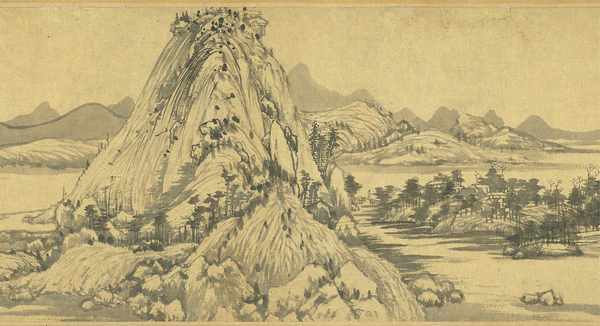
Huang Gongwang is one of the most esteemed painters in Chinese art history, renowned for his contributions during the Yuan Dynasty. His masterpiece, Dwelling in the Fuchun Mountains, is celebrated as one of the top ten masterpieces in Chinese art. Painted nearly 700 years ago, this artwork epitomizes Huang's profound understanding of the natural landscape and his unique painting style. It was famously reunited for an exhibition in 2011, offering a rare opportunity to view the complete work as originally intended.
Early Life
Huang Gongwang was born in 1269 in Changshu, Jiangsu province, during a period of significant transition in Chinese history. Orphaned at a young age, Huang initially pursued a career as a government official. However, his life took a dramatic turn following a period of imprisonment, which dashed his hopes of further official advancement. It was only in his 50s, after returning to his hometown, that Huang embraced his passion for painting. This late blooming in his artistic career would ultimately lead to the creation of some of the most revered works in Chinese art.
Career
Influences
Huang Gongwang's artistic journey was deeply influenced by the natural landscapes that surrounded him, as well as the tumultuous and introspective experiences of his own life. After moving to the Fuchun Mountains in 1347, Huang was inspired by the serene beauty of the area, which he immortalized in his paintings. His work reflects a profound connection with the natural world, characterized by an exquisite attention to detail and a mastery of traditional Chinese painting techniques. Huang drew inspiration from earlier masters such as Zhao Mengfu, contributing to a tradition that emphasized the harmony between man and nature.
Key Works
Dwelling in the Fuchun Mountains stands as Huang Gongwang’s most celebrated work, a monumental landscape painting that captures the subtleties and grandeur of the natural environment. This painting, despite being split into two parts, continues to be revered for its compositional elegance and the dynamic interplay of ink washes and detailed brushwork. The painting not only showcases Huang's technical prowess but also encapsulates the philosophical underpinnings of Yuan Dynasty landscape art. His other works, though less renowned, also reflect his deep appreciation for the natural world and his ability to convey its essence through art.
Artistic Style
Huang Gongwang's artistic style represents a synthesis of simplicity and complexity, where seemingly effortless brushstrokes convey intricate details and profound meaning. His use of "liubai," a technique that strategically employs empty spaces to suggest elements like clouds and water, is a hallmark of his style. This approach reflects the Taoist philosophy of embracing the void and allowing the imagination to fill in the gaps, creating a sense of depth and atmosphere. Huang's brushwork is characterized by its boldness and fluidity, capturing the essence of the landscape with an economy of strokes.
Legacy
Huang Gongwang's influence extends far beyond his lifetime, as he is regarded as one of the "Four Great Masters" of the Yuan Dynasty, alongside Zhao Mengfu, Ni Zan, and Wang Meng. His work has inspired countless artists, both during his time and in subsequent generations. His ability to convey the spirit of the natural world through his paintings has left a lasting impact on Chinese art, establishing a standard for landscape painting that continued to resonate through the Ming (1368-1644) and Qing Dynasties (1644-1911). Huang's legacy is preserved not only in his surviving works but also in the countless artists who have drawn inspiration from his style and philosophy.








